Every farm produces waste, but not all farm waste is the same. A heap of bale wrap, a drum of used engine oil and a dead ewe are all waste, and each one comes with its own rules on how it’s stored, who can take it away and where it ends up.
Those rules are easy to mix up, and that’s usually where the trouble starts. Oil filters go in the skip with the general rubbish, or a bit of plastic ends up on the fire with the hedge cuttings.
This guide sorts farm waste into four groups: hazardous, non-hazardous, organic and synthetic. For each one, we explain what’s included and how it should be stored, handled and treated.
What Counts as Farm Waste?
Put simply, farm waste is anything produced on a farm that you throw away, intend to throw away or have to get rid of. Since 2006, it has been controlled in the same way as waste from any other business in England and Wales.
There’s one important exception. Manure and slurry used as fertiliser on agricultural land aren’t normally treated as waste, although they’re still covered by other rules, which we come to below.
The four groups overlap. Farm plastic, for example, is both synthetic and non-hazardous. It helps to look at each type of waste in two ways:
- Hazardous or non-hazardous: this decides the paperwork and who is allowed to collect it.
- Organic or synthetic: this tells you whether it will break down, and which treatment routes are open to it.
Hazardous Farm Waste
Hazardous waste is anything that could harm people or the environment because of what’s in it. On most farms, it’s the smallest group by volume, but it comes with the strictest rules.
Common hazardous farm wastes include:
- Waste oil and used oil filters
- Lead-acid batteries from tractors and vehicles
- Unused or out-of-date pesticides, and chemical containers that haven’t been rinsed
- Used sheep dip
- Unwanted veterinary medicines and used needles
- Asbestos cement sheeting from older buildings
- Fluorescent tubes, antifreeze and brake fluid
- Old fridges and freezers
How to Handle Hazardous Farm Waste
Keep it separate. Hazardous waste mustn’t be mixed with general waste, or with other types of hazardous waste, so store each type in its own sound, clearly labelled container, under cover and away from drains.
When it leaves the farm, it travels with a hazardous waste consignment note, which you keep for three years. Farms in England no longer have to register as hazardous waste producers (that requirement ended in 2016), but the consignment note rules still apply.
Waste Oil
Waste oil is the hazardous waste most farms deal with regularly, from servicing tractors and machinery. Store it in a bunded tank or container, with the bund able to hold at least 110% of what’s inside. Keep the lid on so rain can’t get in, and don’t mix it with antifreeze, solvents or water. We collect waste oil by tanker from farms across Southern England, from a single tank to several on different sites.
Chemical and Pesticide Containers
Empty agrochemical containers should be triple-rinsed or pressure-rinsed as soon as they’re emptied, with the rinsings going into the sprayer. Once properly rinsed, they can usually be recycled with your other farm plastics. Containers that haven’t been rinsed, and any unused pesticides, are hazardous waste and need a specialist collection.
Veterinary Waste
Used needles should go straight into a proper sharps bin. Sharps and unwanted veterinary medicines need to go to a licensed clinical waste collector, and many vets can arrange this for their farm clients.
Asbestos
Asbestos cement roofs and cladding are common on older farm buildings. If the sheets are in good condition, they’re often best left alone. If they’re damaged or the building is coming down, use a contractor who is trained and competent to remove asbestos, and don’t break or cut the sheets yourself.
Non-Hazardous Farm Waste
Most of what a farm throws away falls into this group. It’s less dangerous than hazardous waste, but it’s still covered by the duty of care, so it has to go to a registered waste carrier, with a waste transfer note that you keep for at least two years.
Non-hazardous farm waste includes:
- Farm plastics, such as silage wrap, sheet, net wrap, string, bags and triple-rinsed drums
- Tyres
- Scrap metal and old machinery
- Cardboard and paper packaging
- Untreated timber and pallets
- Glass and general mixed waste
Plastics and tyres are the two that cause most farms the biggest headache, so we cover them separately under synthetic waste below.
How to Handle Non-Hazardous Farm Waste
The key is separation. Mixed waste is harder and more expensive to recycle, and much more likely to end up in landfill. Kept apart, most of it can be recycled.
- Scrap metal: sell it to a licensed scrap metal dealer. Dealers aren’t allowed to pay cash, so expect payment by bank transfer and keep a note of what went.
- Cardboard: keep it dry and flat. Dry cardboard can go in its own Solway liner and be collected with your plastics.
- Timber: untreated wood and pallets can often be reused or chipped. Treated or painted wood can’t be burned in the open.
- General waste: whatever is left should be as small a pile as you can make it. A business waste collection or a skip from a registered carrier is the usual route.
Organic Farm Waste
Organic waste comes from plants and animals, so it breaks down naturally. That doesn’t make it harmless. In the wrong place, organic waste is one of the biggest causes of water pollution from farms. It also has the most options for agricultural waste treatment, because so much of it can be put back to use.
Manure and Slurry
Used as fertiliser on agricultural land, manure and slurry aren’t normally classed as waste, but they’re still regulated. The Farming Rules for Water set out when and where you can spread them. They also say you shouldn’t store manure in a field within 10 metres of a watercourse, or within 50 metres of a spring, well or borehole. Slurry stores have their own construction and capacity rules under the SSAFO regulations.
Silage Effluent
Silage effluent is highly polluting if it gets into a ditch or stream. It has to be collected and stored under the same SSAFO rules, and once diluted it can be spread to land as a fertiliser when ground conditions allow.
Crop Residues, Hedge Cuttings and Green Waste
Much of this can be composted, chopped and worked back into the soil, or sent to anaerobic digestion. Burning is allowed in some cases. With a registered D7 waste exemption, you can burn plant material and some untreated wood in the open where it was produced, up to 10 tonnes in any 24 hours. Nothing else can go on the fire, so keep plastic, tyres and treated wood well away from it. The GOV.UK guidance mentions new rules from January 2027, so check it before you register.
Fallen Stock
You can’t bury or burn fallen stock on the farm in England. Dead animals have to be collected by an approved transporter and taken to a knacker’s yard, hunt kennel, renderer or incinerator. Many farmers use the National Fallen Stock Company, a not-for-profit scheme that puts them in touch with local collectors.
Treatment Options for Organic Farm Waste
The main agricultural waste treatment routes for organic material are:
- Composting: turns green waste, crop residues and solid manure into a soil improver.
- Anaerobic digestion: breaks down slurry, manure, crop residues and food waste in sealed tanks, producing biogas and digestate, a fertiliser that goes back on the land.
- Spreading to land: returns nutrients to the soil, within the limits set by the Farming Rules for Water.
Our co-founder, Ed Du Val, is the managing partner of Apsley Farms, one of the UK’s leading anaerobic digestion plants, and our own bulk HGV regularly moves compost and mulch across the region.
Synthetic Farm Waste
Synthetic waste is anything man-made that won’t break down naturally. On most farms, that means plastic and rubber. Neither is hazardous, but they’re the waste many farms struggle with most, because there’s a lot of it and it can’t be burned or buried.
Farm Plastics
Silage wrap, clamp sheet, net wrap, baler twine, fertiliser, seed and feed bags, drums, buckets and tree cones all build up quickly. The Chartered Institution of Wastes Management puts the UK’s agricultural plastic waste at around 135,500 tonnes a year.
Good agricultural waste handling starts when the plastic comes off the bale. Shake off as much silage, soil and water as you can, then put each type into its own liner. With the Solway Bin & Liner System, one well-compacted liner holds over 250 round bale wraps. Once the liners are full, we collect them and take them to our yard, where the plastic is baled and sent to UK recyclers to be turned into polymer pellets.
Tyres
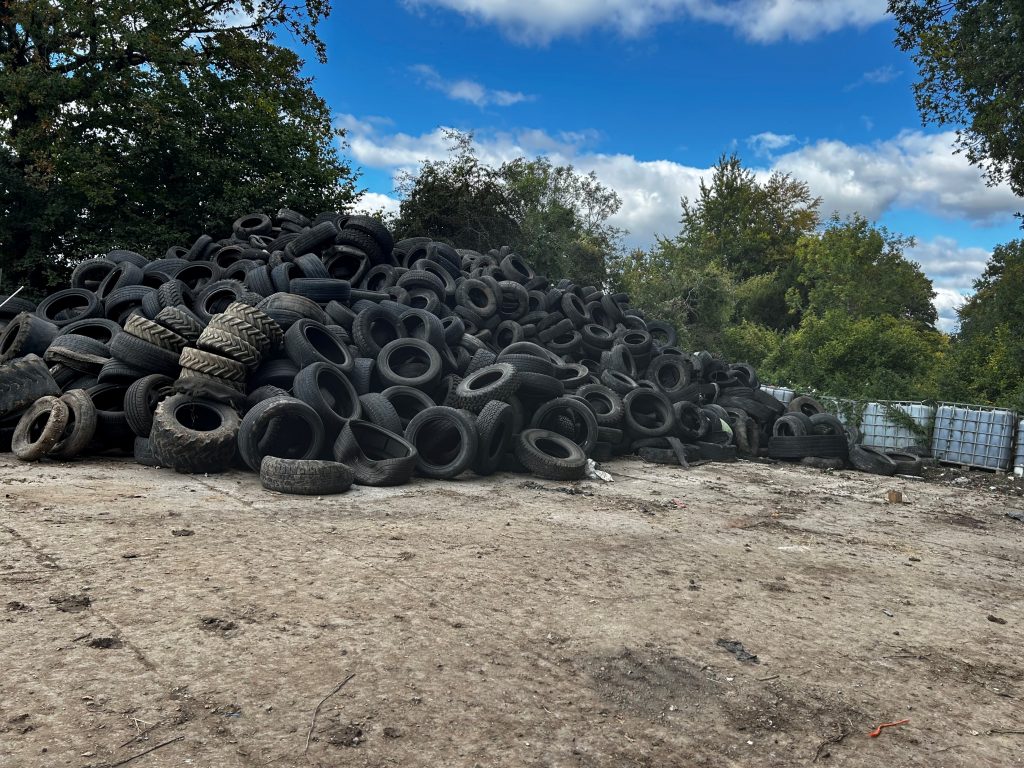
Farms often have more tyres than they realise. Worn tractor and implement tyres, car and lorry tyres, rubber tracks and the old tyres holding down the silage clamp all add up. Tyres can’t go to landfill, whole or shredded, and they can’t be burned.
Stack them somewhere a lorry can reach, away from buildings in case of fire. After collection, tyres are shredded into rubber crumb or used as fuel in cement kilns, with the steel recycled. If you’re replacing the tyres on your clamp, lorry tyre sidewalls are a cleaner option because they can’t hold water. We supply them, and some are made from the lorry tyres we collect. Our tyre recycling service takes anything from a handful to thousands, including tyres still on rims.
Farm Waste at a Glance
| Waste | Group | How to store it | Where it goes |
|---|---|---|---|
| Silage wrap, sheet, net wrap and string | Synthetic, non-hazardous | Own Solway liner, shaken clean and dry | Recycled into polymer pellets |
| Fertiliser, seed and feed bags | Synthetic, non-hazardous | Own liner, emptied and shaken out | Recycled |
| Triple-rinsed chemical drums | Synthetic, non-hazardous | Own liner, kept dry | Recycled |
| Tyres | Synthetic, non-hazardous | Stacked, away from buildings | Shredded or used as kiln fuel |
| Waste oil | Hazardous | Bunded tank, lid on | Collected by tanker for treatment |
| Unrinsed containers and unused pesticides | Hazardous | Locked, labelled chemical store | Specialist hazardous waste collection |
| Sharps and vet medicines | Hazardous | Sharps bin, kept secure | Licensed clinical waste collector |
| Scrap metal | Non-hazardous | One area, clear of other waste | Licensed scrap metal dealer |
| Cardboard | Non-hazardous | Flat, dry, own liner | Recycled |
| Manure and slurry | Organic | Approved store, or field heap away from water | Spread to land or anaerobic digestion |
| Hedge cuttings and crop residues | Organic | Where produced | Composted, worked into soil or burned under D7 |
| Fallen stock | Organic | Covered, out of reach of animals | Approved collector or NFSCo |
Good Agricultural Waste Handling, Step by Step
Whatever mix of waste your farm produces, the same basic approach works.
- List what you produce. Walk round the farm and note each type of waste and roughly how much builds up in a year. That list is the start of a simple farm waste management plan.
- Separate it at source. Set up liners, bins or bays so different wastes never get mixed in the first place.
- Store it safely. Keep plastic dry, oil bunded and chemicals locked away, with everything kept clear of drains and watercourses.
- Check your carrier. Anyone taking waste off your farm should be a registered waste carrier. You can check on the Environment Agency’s public register.
- Keep the paperwork. File waste transfer notes for two years and hazardous waste consignment notes for three.
- Book collections before it builds up. Autumn and winter are quieter, so they’re a good time for a tidy-up before the busy months from May to July.
Let Us Take Care of Your Farm Waste
Farm Waste Solutions collects farm plastics, tyres and waste oil from farms across Southern England, and runs farm plastic and tyre hub days across the South West. There are no membership or acreage fees. You pay for what we collect, and you get paperwork for every collection.
Not sure which group something falls into, or whether we can take it? Call us on 01264 554477 and we’ll let you know. For more on why it matters, read why recycling agricultural waste is important.
Farm Waste FAQs
What are the main types of farm waste?
Farm waste can be split into hazardous waste (such as waste oil, unrinsed chemical containers and veterinary sharps), non-hazardous waste (such as plastics, tyres, scrap metal and cardboard), organic waste (such as manure, crop residues and fallen stock) and synthetic waste, which covers the plastic and rubber that won’t break down.
What does agricultural waste include?
Anything a farm throws away: packaging, plastics, tyres, oil, chemicals and their containers, veterinary waste, scrap metal, old machinery, building waste, crop residues and dead animals. Manure and slurry used as fertiliser on farmland aren’t usually counted as waste.
How is agricultural waste disposed of?
It depends on the type. Plastics, tyres, cardboard and metal are collected for recycling. Waste oil and other hazardous waste go for specialist treatment with a consignment note. Organic waste is usually composted, spread to land or sent to anaerobic digestion, and fallen stock goes to an approved collector. Landfill is the last resort, and tyres can’t go there at all.
What is agricultural waste treatment?
It’s any process that makes farm waste safe or turns it into something useful. That includes recycling plastic into pellets, treating waste oil so it can be reused, composting green waste and using anaerobic digestion to turn manure and slurry into energy and fertiliser.
Can I take farm waste to the tip?
Generally not. Farm waste is business waste, so household waste recycling centres won’t usually accept it. Use a registered waste carrier instead, or a farm plastic hub day if there’s one near you.